


10 Key Takeaways from Collaborative Approaches to Market Access: Working with Stakeholders
- Stakeholder Importance: Effective market access requires collaboration with diverse stakeholders, including healthcare providers, payers, regulatory bodies, and patient advocacy groups, each contributing unique perspectives and expertise.
- Healthcare Providers: Engage early with healthcare providers to gather clinical insights and provide continuous education. This fosters trust and supports the adoption of new treatments.
- Payers and Insurers: Develop compelling value propositions that highlight cost-effectiveness and patient outcomes. Transparent discussions and pilot programs can build trust and facilitate favorable reimbursement terms.
- Regulatory Bodies: Maintain open communication with regulatory agencies, participate in advisory panels, and ensure compliance support to streamline approval processes.
- Patients and Advocacy Groups: Involve patients in clinical trials, support advocacy groups, and provide educational resources to ensure patient-centered approaches and enhance treatment adherence.
- Early Engagement: Involving stakeholders early in the product development process ensures that their needs and feedback shape the final product, leading to better market acceptance.
- Transparent Communication: Regular updates and clear communication with stakeholders build trust, mitigate misunderstandings, and align expectations, facilitating smoother collaboration.
- Joint Value Creation: Collaborate with stakeholders to create value propositions that align with their goals, addressing clinical, economic, and regulatory concerns to support market access strategies.
- Real-World Evidence: Utilize real-world data to demonstrate the effectiveness and value of products. This evidence-based approach strengthens credibility and supports negotiations with payers and regulators.
- Long-Term Relationships: Focus on building sustainable, mutually beneficial relationships with stakeholders, fostering trust, ongoing support, and stability, which enhances market access efforts and ensures positive patient outcomes.
Please look at the Market Access & HEOR Resource category for more articles.

Introduction to Collaborative Approaches to Market Access
Market access is a complex process that involves navigating various regulatory, economic, and logistical challenges to ensure that products, particularly in the healthcare sector, are available to patients who need them. This multifaceted journey includes overcoming hurdles related to regulatory approvals, pricing negotiations, reimbursement policies, supply chain logistics, and market competition. Successfully managing these aspects requires not only a thorough understanding of each component but also the ability to coordinate and integrate them into a cohesive strategy.


In the healthcare sector, where the stakes are particularly high, the process becomes even more intricate. The need to meet stringent regulatory standards, demonstrate cost-effectiveness to payers and ensure timely and equitable access to treatments adds layers of complexity. Additionally, the growing emphasis on patient-centric care means that companies must also prioritize patient needs and outcomes throughout the market access process.
Given these challenges, one of the most effective ways to achieve successful market access is through collaboration with a diverse range of stakeholders. This collaborative approach recognizes that no single entity can address all the complexities of market access alone. Instead, success is more likely when companies work closely with various stakeholders, each bringing unique perspectives, expertise, and influence to the table.

Stakeholder collaboration involves engaging with healthcare providers, payers, regulatory bodies, patients and patient advocacy groups, pharmaceutical companies, and manufacturers. Each of these stakeholders plays a critical role in the market access landscape. For instance, healthcare providers offer insights into clinical needs and treatment efficacy, while payers and insurers are crucial for determining reimbursement levels and coverage policies. Regulatory bodies ensure the safety and efficacy of products, and patient advocacy groups help amplify patient voices and prioritize patient-centered approaches.
By fostering strong, transparent, and mutually beneficial relationships with these stakeholders, companies can navigate the market access process more effectively. Such collaborations can lead to better-aligned goals, more efficient regulatory approvals, optimized pricing and reimbursement strategies, and ultimately, broader and more timely access to essential healthcare products.
This article explores the importance of stakeholder collaboration and provides strategies for working effectively with different groups. It delves into the roles of various stakeholders, outlines effective collaboration strategies, and presents real-world examples of successful market access through collaborative efforts. Through these insights, companies can better understand how to leverage stakeholder relationships to overcome the challenges of market access and ensure that their products reach the patients who need them most.
Understanding the Stakeholders for Effective Collaboration for Market Access
In the intricate landscape of market access, collaboration with a diverse array of stakeholders is essential for ensuring that healthcare products reach the patients who need them. Each stakeholder—ranging from healthcare providers to payers, regulatory bodies, and patient advocacy groups—plays a vital role in shaping the accessibility and success of new treatments.
We can define stakeholders in market access as,
- Healthcare providers
- Payers and insurers
- Regulatory bodies
- Patient and patient advocacy groups
By understanding and effectively engaging with these stakeholders, companies can navigate regulatory, economic, and logistical challenges more effectively. This article delves into the roles of these key stakeholders and provides strategies for fostering productive collaborations, ultimately enhancing the market access process and ensuring that patients receive timely and effective treatments.
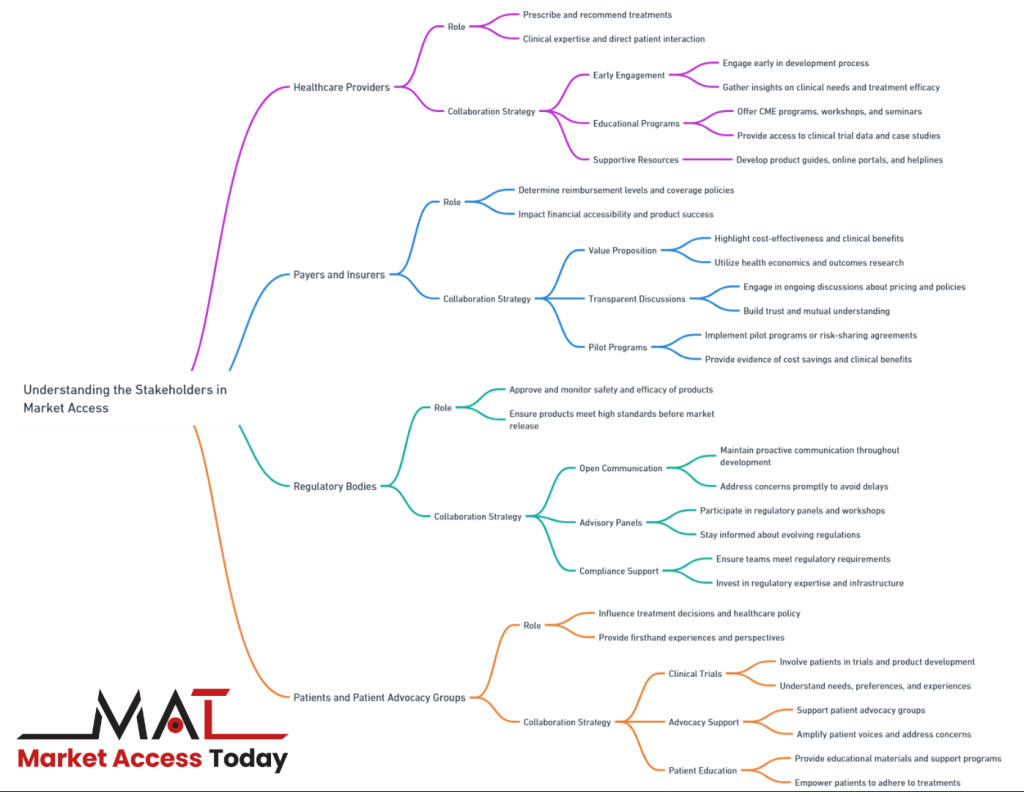
Let`s deep dive into the stakeholders in market access.
1. Healthcare Providers
Role: Healthcare providers, including physicians, nurses, and other medical professionals, play a crucial role in prescribing and recommending treatments to patients. Their clinical expertise and direct patient interaction make them key influencers in the adoption of new products and therapies.
Collaboration Strategy:
- Early Engagement: Engage healthcare providers early in the development process to gather valuable insights on clinical needs, treatment efficacy, and patient experiences. This can be achieved through advisory boards, focus groups, and direct consultations.
- Educational Programs: Offer continuous medical education (CME) programs, workshops, and seminars to keep healthcare providers informed about the latest advancements and benefits of your product. Providing access to clinical trial data and case studies can help reinforce the product’s value.
- Supportive Resources: Develop comprehensive resources such as detailed product guides, online portals, and helplines to support healthcare providers in their practice. Ensuring they have easy access to information enhances their confidence in prescribing your product.
2. Payers and Insurers
Role: Payers and insurers are responsible for determining reimbursement levels and coverage policies. Their decisions directly impact the financial accessibility of treatments for patients and the overall success of a product in the market.
Collaboration Strategy:
- Value Proposition: Develop a clear and compelling value proposition that highlights the cost-effectiveness, clinical benefits, and improved patient outcomes associated with your product. Utilize health economics and outcomes research (HEOR) to support your claims.
- Transparent Discussions: Engage in transparent and ongoing discussions with payers and insurers about pricing, reimbursement policies, and potential concerns. Building a strong relationship based on trust and mutual understanding can facilitate smoother negotiations.
- Pilot Programs: Consider implementing pilot programs or risk-sharing agreements to demonstrate the real-world value of your product. These initiatives can provide payers with concrete evidence of cost savings and clinical benefits.
3. Regulatory Bodies
Role: Regulatory bodies, such as the FDA in the United States or EMA in Europe, are responsible for approving and monitoring the safety and efficacy of healthcare products. Their stringent guidelines and approval processes ensure that products meet high standards before reaching the market.
Collaboration Strategy:
- Open Communication: Maintain open and proactive communication with regulatory agencies throughout the product development and approval process. Regular updates and consultations can help address any concerns promptly and avoid delays.
- Advisory Panels: Participate in regulatory advisory panels and workshops to stay informed about evolving regulations and contribute to the regulatory dialogue. Being actively involved can help your company anticipate changes and adapt accordingly.
- Compliance Support: Ensure your internal teams are well-versed in regulatory requirements and prepared to meet compliance standards. Investing in regulatory expertise and infrastructure can streamline the approval process.
4. Patients and Patient Advocacy Groups
Role: Patients and patient advocacy groups play a significant role in influencing treatment decisions and healthcare policy through advocacy and awareness efforts. Their firsthand experiences and perspectives are invaluable in shaping patient-centered healthcare solutions.
Collaboration Strategy:
- Clinical Trials: Involve patients in clinical trials and product development to better understand their needs, preferences, and experiences. Patient feedback can guide the design of more effective and user-friendly treatments.
- Advocacy Support: Support patient advocacy groups through funding, resources, and collaborative initiatives. Amplifying patient voices and addressing their concerns can foster trust and loyalty.
- Patient Education: Provide educational materials and support programs to help patients understand the benefits and proper use of your product. Empowered patients are more likely to adhere to treatments and advocate for their inclusion in healthcare plans.
By understanding and effectively collaborating with these stakeholders, companies can navigate the complexities of market access more successfully. Each stakeholder brings unique insights and capabilities that, when harnessed through strategic collaboration, can significantly enhance the market access process and ensure that patients receive timely and effective treatments.
Future Directions of Effective Collaboration in Market Access
As the landscape of healthcare continues to evolve, the strategies for achieving successful market access must also adapt and innovate. The following future directions highlight emerging trends and areas of focus that can further enhance stakeholder collaboration and ensure that new treatments reach the patients who need them most.
Embracing Digital Health Technologies
Integration of Digital Tools: The incorporation of digital health technologies, such as telemedicine, mobile health apps, and wearable devices, can significantly enhance data collection and patient monitoring. These tools provide real-time insights into treatment efficacy and patient adherence, enabling more dynamic and responsive market access strategies.
Digital Therapeutics: The development and integration of digital therapeutics alongside traditional pharmaceutical treatments can offer comprehensive care solutions. Collaborating with technology companies to develop and validate these tools can open new pathways for market access.
Enhanced Data Analytics and Artificial Intelligence
Predictive Analytics: Utilizing advanced data analytics and artificial intelligence (AI) can help predict market trends, patient outcomes, and potential challenges. These insights enable companies to tailor their market access strategies more effectively and anticipate stakeholder needs.
Real-World Evidence (RWE): Leveraging real-world evidence from electronic health records (EHRs), patient registries, and other sources can strengthen the value proposition of new products. Collaborations with data analytics firms and healthcare providers can facilitate the collection and analysis of RWE to support regulatory submissions and payer negotiations.
Strengthening Patient-Centric Approaches
Patient Involvement in R&D: Increasing patient involvement in research and development (R&D) ensures that new products address genuine patient needs. Co-creating clinical trial designs with patient advocacy groups and utilizing patient-reported outcomes (PROs) can enhance the relevance and acceptance of new treatments.
Personalized Medicine: The shift towards personalized medicine, where treatments are tailored to individual genetic profiles, requires collaboration with genomic research firms and healthcare providers. This approach promises more effective and targeted therapies, improving patient outcomes and market access.
Expanding Global Market Access
Adapting to Regional Markets: Understanding and adapting to the regulatory and market access landscapes of different regions is crucial for global success. Forming local partnerships and engaging with regional regulatory bodies can facilitate smoother market entry and compliance.
Global Health Initiatives: Participating in global health initiatives and public-private partnerships can help address health disparities and expand access to essential treatments in low- and middle-income countries. These efforts not only enhance market reach but also contribute to global health equity.
Policy Advocacy and Stakeholder Engagement
Proactive Policy Advocacy: Engaging in proactive policy advocacy can influence healthcare policies and regulations in favor of innovation and patient access. Building coalitions with other industry players, patient advocacy groups, and professional associations can amplify the impact of these efforts.
Continuous Stakeholder Education: Ongoing education and engagement with stakeholders about the evolving healthcare landscape and new treatment paradigms are essential. Regularly updating stakeholders on advancements and regulatory changes ensures sustained support and collaboration.
Sustainable and Ethical Practices
Sustainability Initiatives: Incorporating sustainability initiatives into market access strategies can enhance corporate reputation and stakeholder trust. Focusing on environmentally friendly manufacturing processes, reducing waste, and ensuring ethical supply chains align with broader societal values and expectations.
Ethical Considerations: Maintaining high ethical standards in all collaborations, from clinical trials to marketing, reinforces trust and credibility. Transparent reporting, fair pricing strategies, and respect for patient rights are foundational to sustainable market access.
The future of market access lies in the ability to adapt to emerging trends, leverage technological advancements, and foster deeper, more meaningful collaborations with stakeholders. By embracing these future directions, companies can navigate the complexities of the healthcare landscape more effectively, ensuring that innovative treatments reach and benefit patients worldwide. As the industry continues to evolve, staying at the forefront of these trends will be essential for sustained success and positive patient outcomes.
Conclusion
Achieving successful market access in the healthcare sector is a multifaceted endeavor that requires strategic planning, comprehensive stakeholder engagement, and continuous adaptation to an ever-evolving landscape. This article has underscored the importance of collaborating with various stakeholders—healthcare providers, payers, regulatory bodies, patient advocacy groups, and pharmaceutical companies—to overcome the complex challenges inherent in market access.
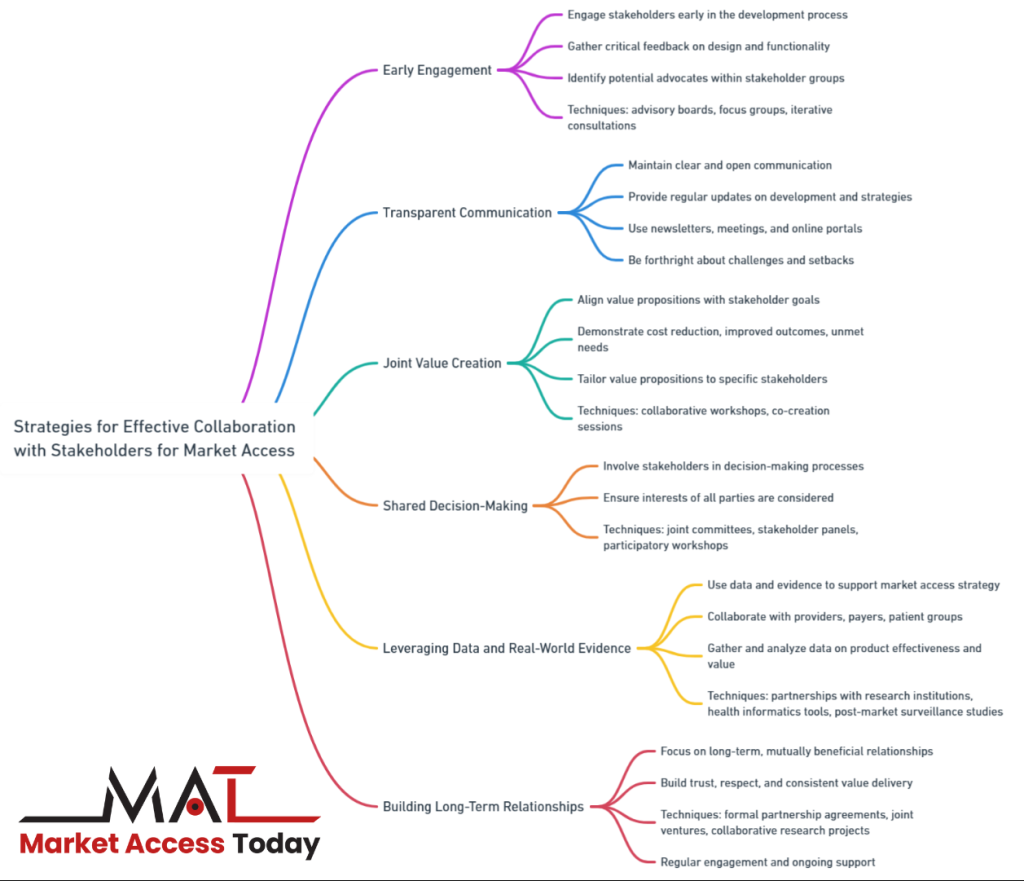
Effective Collaboration Strategies:
- Early Engagement: Integrating stakeholder perspectives early in the development process leads to more relevant and acceptable products.
- Transparent Communication: Building trust through regular updates and open lines of communication fosters a collaborative environment.
- Joint Value Creation: Aligning value propositions with stakeholder goals demonstrates mutual benefits and supports successful negotiations.
- Shared Decision-Making: Inclusive decision-making processes ensure that all interests are considered, leading to more balanced and effective strategies.
- Leveraging Data and Real-World Evidence: Utilizing robust data and real-world evidence strengthens the case for market access and adoption.
- Building Long-Term Relationships: Focusing on long-term, mutually beneficial relationships with stakeholders enhances stability and support.
Future Directions:
- Digital Health Technologies: Embracing digital tools and therapeutics can provide comprehensive care solutions and enhance data-driven decision-making.
- Enhanced Data Analytics and AI: Leveraging predictive analytics and real-world evidence can refine market access strategies and anticipate stakeholder needs.
- Patient-Centric Approaches: Increasing patient involvement in R&D and advancing personalized medicine will improve treatment relevance and outcomes.
- Global Market Access: Adapting to regional markets and participating in global health initiatives can expand reach and contribute to health equity.
- Policy Advocacy and Stakeholder Engagement: Proactive policy advocacy and continuous stakeholder education are essential for navigating regulatory landscapes and fostering support.
- Sustainable and Ethical Practices: Incorporating sustainability and ethical considerations into market access strategies builds trust and aligns with societal values.
By implementing these strategies and embracing future directions, companies can navigate the complexities of market access more effectively, ensuring that innovative healthcare products reach the patients who need them most. The success of market access efforts hinges on the ability to foster strong, transparent, and mutually beneficial relationships with stakeholders, adapt to new trends, and maintain a patient-centered focus. As the healthcare industry continues to evolve, staying at the forefront of these strategies will be crucial for sustained success and positive patient outcomes.
Güvenç Koçkaya, July 2024
10 FAQs from “Collaborative Approaches to Market Access: Working with Stakeholders”
- What is market access in the healthcare sector?
- Market access in healthcare involves navigating regulatory, economic, and logistical challenges to ensure that healthcare products reach patients who need them.
- Why is stakeholder collaboration important for market access?
- Stakeholder collaboration is crucial because it brings diverse perspectives, expertise, and influence, helping to address the complexities of market access more effectively.
- Who are the key stakeholders in market access?
- Key stakeholders include healthcare providers, payers and insurers, regulatory bodies, patients, and patient advocacy groups.
- How can early engagement with healthcare providers benefit market access?
- Early engagement with healthcare providers offers valuable insights into clinical needs and treatment efficacy, leading to better-designed products and smoother adoption.
- What role do payers and insurers play in market access?
- Payers and insurers determine reimbursement levels and coverage policies, directly impacting the financial accessibility and success of healthcare products.
- How can companies maintain effective communication with regulatory bodies?
- Companies should maintain open and proactive communication, participate in regulatory advisory panels, and ensure compliance to facilitate smoother regulatory approval processes.
- Why is patient involvement crucial in market access strategies?
- Patient involvement ensures that treatments are patient-centered, addressing real needs and improving adherence, ultimately leading to better healthcare outcomes.
- What strategies can enhance collaboration with payers and insurers?
- Developing a clear value proposition, engaging in transparent discussions, and implementing pilot programs can build trust and secure favorable reimbursement terms.
- How can real-world evidence support market access?
- Real-world evidence provides robust data demonstrating the effectiveness and value of products, strengthening negotiations with payers and regulators.
- What are the benefits of building long-term relationships with stakeholders?
- Long-term relationships foster trust, ongoing support, and stability, enhancing the overall market access process and ensuring sustained success in reaching patients.
References
- Yilmaz, V. (2020). Exploring Patient Experiences of the Internal Market for Healthcare Provision in Turkey: Publicness under Pressure. Journal of Social Policy, 50, 588-605.
- Vargas, I., Vázquez, M., Mogollón-Pérez, A., & Unger, J. (2010). Barriers of access to care in a managed competition model: lessons from Colombia. BMC Health Services Research, 10, 297-297.
- Cutler, D., Dafny, L. S., Grabowski, D., & Ody, C. (2020). Vertical Integration of Healthcare Providers Increases Self-Referrals and Can Reduce Downstream Competition: The Case of Hospital-Owned Skilled Nursing Facilities. NBER Working Paper Series.
- Lessard, L. M., & Solomon, J. (2016). Demographic and service-use profiles of individuals using the CarePayment program for hospital-related medical debt: results from a nationwide survey of guarantors. BMC Health Services Research, 16.
- Roy, A. (2016). The Need for Regulatory Reform to Improve Rural People’s Access to Healthcare: Views of Administrators of the Public-private Mixed Health System of Bangladesh. Diversity and equality in health and care, 13, 269-278.
- Coombs, N., Meriwether, W. E., Caringi, J. C., & Newcomer, S. R. (2021). Barriers to healthcare access among U.S. adults with mental health challenges: A population-based study. SSM – Population Health, 15.
- Brandt, F., & Znotka, M. (2019). Influencing factors and outcomes of entrepreneurial activities in German healthcare organizations – a qualitative study. International Journal of Healthcare Management, 14, 805-812.
- Krachler, N., Greer, I., & Umney, C. (2021). Can public healthcare afford marketization? Market principles, mechanisms, and effects in five health systems. Public Administration Review.
- Koch, M. A. (2015). Pharmaceutical Market Access: current state of affairs and key challenges – results of the Market Access Launch Excellence Inventory (MALEI). Journal of Market Access & Health Policy, 3.
- Cohen, J., Wilson, A., & Manzolillo, K. (2012). Clinical and economic challenges facing pharmacogenomics. The Pharmacogenomics Journal, 13, 378-388.
- Kullberg, L., Blomqvist, P., & Winblad, U. (2018). Market-orienting reforms in rural health care in Sweden: how can equity in access be preserved? International Journal for Equity in Health, 17.
- Alam, K., Mahumud, R., Alam, F., Keramat, S. A., Erdiaw-Kwasie, M., & Sarker, A. (2019). Determinants of access to eHealth services in regional Australia. International journal of medical informatics, 131, 103960.
- Cohen, J. P., Faden, L. B., Predaris, S., & Young, B. (2007). Patient access to pharmaceuticals: an international comparison. The European Journal of Health Economics, 8, 253-266.
- Lopata, E., Terrone, C., & Gopalan, A. (2023). Opportunities and challenges surrounding financial models for high-investment medications: A survey of access decision-makers and employers. Journal of Managed Care & Specialty Pharmacy, 29.


This article has been prepared with the assistance of AI and reviewed by an editor. For more details, please refer to our Terms and Conditions. We do not accept any responsibility or liability for the accuracy, content, images, videos, licenses, completeness, legality, or reliability of the information contained in this article. If you have any complaints or copyright issues related to this article, kindly contact the author.
