


10 Key Takeaways from “Understanding Value-Based Pricing in Medical Devices: Aligning Cost with Patient Outcomes and Healthcare Efficiency”:
- Shift from Traditional Pricing Models: Value-based pricing (VBP) represents a shift from traditional cost-plus or competitive pricing models, focusing on the outcomes and benefits that medical devices provide to patients and healthcare systems.
- Patient-Centered Pricing: VBP emphasizes pricing devices based on their contribution to improved patient outcomes, including enhanced quality of life, faster recovery, and reduced complications.
- Economic Value and Cost Savings: Medical devices priced under VBP must demonstrate long-term cost savings for healthcare systems, such as reducing hospital stays, and readmissions, or minimizing the need for follow-up treatments.
- Global Adoption: VBP is gaining momentum worldwide as healthcare systems prioritize sustainable, outcome-driven care, encouraging manufacturers to justify their devices based on economic and clinical impact.
- Key Industry Examples: Companies like Medtronic and Johnson & Johnson have successfully adopted VBP for innovative devices, such as continuous glucose monitors and joint replacement implants, which are priced according to the value they deliver in real-world settings.
- Regulatory and Reimbursement Integration: VBP aligns well with evolving healthcare reimbursement models that reward medical devices for delivering tangible improvements in patient health and healthcare efficiency.
- Focus on Innovation: VBP encourages manufacturers to innovate, creating advanced devices that provide superior clinical outcomes and justify premium pricing based on their differentiated performance.
- Challenges in Evidence Generation: Successfully implementing VBP requires robust clinical data, real-world evidence (RWE), and Health Technology Assessments (HTAs) to validate the efficacy and cost-effectiveness of medical devices.
- Collaborative Approach: VBP fosters collaboration between manufacturers, payers, and healthcare providers, with outcome-based contracts that link device pricing to performance metrics, ensuring a shared-risk model.
- Future Potential: Emerging technologies such as AI-enhanced devices, predictive analytics, and digital health solutions are well-suited to thrive under VBP models, where pricing is closely tied to their measurable impact on patient care and healthcare savings.

Please look at the Market Access & HEOR Resource category for more articles.


Introduction to Value-Based Pricing in Medical Devices
In an evolving healthcare landscape, the traditional approaches to pricing medical devices, often rooted in cost-plus or competitive pricing models, are proving insufficient in capturing the true worth of innovative technologies. As the industry shifts towards outcomes-driven care, value-based pricing (VBP) has emerged as a compelling strategy for aligning the cost of medical devices with the benefits they provide.
Unlike conventional pricing methods that focus primarily on production costs or market competition, VBP places emphasis on the value a device delivers to patients, healthcare systems, and society as a whole. This model seeks to ensure that the price of a device reflects its contribution to improved clinical outcomes, enhanced quality of life, and overall cost-effectiveness within healthcare settings.

The adoption of VBP in medical devices is gaining momentum globally as healthcare systems increasingly prioritize patient outcomes and sustainable resource use. Manufacturers are now challenged to demonstrate not only the clinical efficacy of their products but also their economic value in terms of reducing healthcare costs, minimizing adverse events, and improving patient satisfaction.
In this context, value-based pricing is emerging as a more equitable and efficient approach, encouraging innovation while ensuring that patients and healthcare providers receive the highest possible return on investment from medical technologies.
History of Value-Based Pricing in Medical Devices
The concept of value-based pricing in healthcare has its roots in the broader shift towards value-based care, a philosophy that emphasizes improving patient outcomes while controlling costs. This approach gained prominence in the early 2000s, particularly following the work of Harvard professors Michael E. Porter and Elizabeth Teisberg, who articulated the need for a healthcare system that rewards providers based on the value they deliver rather than the volume of services provided. Their ideas, presented in the landmark book “Redefining Health Care: Creating Value-Based Competition on Results” (2006), laid the foundation for value-based pricing models, particularly in the pharmaceutical and medical device sectors.
Medtronic and Value-based Pricing
Among the first companies to operationalize value-based pricing was Medtronic, a global leader in medical technology. Medtronic recognized that the traditional cost-plus pricing models, which primarily considered production costs and market competition, did not fully capture the clinical and economic benefits of innovative medical devices. Medtronic began exploring value-based contracts, particularly for devices like insulin pumps and continuous glucose monitors (CGMs), where the value was tied directly to improved patient outcomes and reduced long-term healthcare costs.
One of Medtronic’s pioneering initiatives was in the field of diabetes management. For example, the company entered into value-based agreements for its CGM systems, which continuously monitor blood glucose levels and help patients with diabetes avoid dangerous highs and lows. Under these agreements, Medtronic’s payments were tied to the clinical outcomes achieved by the devices, such as better glucose control, fewer emergency visits, and reduced hospitalization rates. This approach not only incentivized better patient care but also demonstrated the long-term cost-effectiveness of their products to payers and providers, who were willing to invest more upfront due to the demonstrated value.
Johnson & Johnson and Value-based Pricing
Another company that played a crucial role in advancing value-based pricing was Johnson & Johnson, particularly in the orthopedic space. Johnson & Johnson’s subsidiary, DePuy Synthes, launched value-based pricing models for its joint replacement products, such as hip and knee implants. By tying the pricing of these implants to patient outcomes, such as improved mobility, reduced pain, and lower revision rates, Johnson & Johnson ensured that healthcare providers were paying for the value delivered to the patient rather than just the product itself. Their partnerships with hospitals and payers helped demonstrate the long-term economic benefits of investing in higher-quality implants, which reduced the need for costly follow-up surgeries and improved the overall quality of life for patients.
The efforts of companies like Medtronic and Johnson & Johnson marked a significant shift in how medical devices were priced and sold, moving away from a one-size-fits-all model to one that closely aligns with the outcomes and benefits each product provides. These pioneers in value-based pricing have paved the way for a more sustainable and patient-centered approach to healthcare, where pricing reflects not just the cost of production but the real value delivered to patients and the healthcare system.
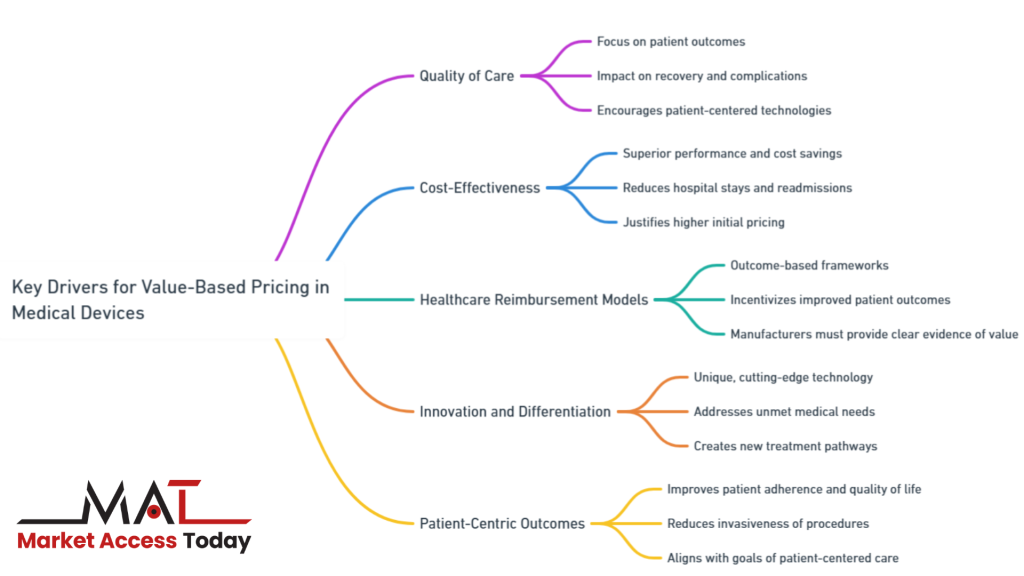
Key Drivers for Value-Based Pricing in Medical Devices
Value-based pricing in the medical device industry is underpinned by several critical factors that reflect the shift toward outcome-oriented care and sustainable healthcare solutions. As healthcare systems across the globe continue to prioritize both quality and efficiency, value-based pricing has emerged as a method that aligns the cost of medical devices with the tangible benefits they provide to patients, providers, and payers.
This approach is driven by the need to deliver superior clinical outcomes, achieve long-term cost savings, and integrate with modern reimbursement models that reward value over volume.
In this context, understanding the key drivers behind value-based pricing is essential for both manufacturers and healthcare stakeholders. From the emphasis on quality of care to the focus on cost-effectiveness, each driver plays a pivotal role in shaping pricing strategies that reflect the true value of medical technologies.
Furthermore, as healthcare reimbursement models evolve to align more closely with patient outcomes, manufacturers must navigate these dynamics to ensure their devices are priced not just competitively but also appropriately to the value they deliver.
We would like to delve into the primary factors that motivate the adoption of value-based pricing in medical devices, highlighting the critical importance of quality, cost-effectiveness, and the integration of value-focused reimbursement models.
The main 5 key drivers of value-based pricing in medical devices are;
- Quality of Care: The emphasis on patient outcomes and the device’s ability to improve clinical results.
- Cost-Effectiveness: The potential for devices to offer superior performance and reduce overall healthcare costs.
- Healthcare Reimbursement Models: The integration of pricing with reimbursement systems that reward value and outcomes.
- Innovation and Differentiation: How technological advancements and the unique features of a device contribute to its perceived value.
- Patient-Centric Outcomes: The role of patient satisfaction, adherence, and overall experience in determining a device’s value.
Let`s deep dive into the key drivers for value-based pricing in medical devices.
Quality of Care:
A central tenet of value-based pricing is its focus on the quality of care delivered to patients. In this model, the price of a medical device is closely tied to its ability to improve clinical outcomes. For example, a device that significantly enhances patient recovery, minimizes complications, or offers a safer alternative to existing treatments justifies a premium price. The emphasis is on measurable improvements in health, such as faster recovery times, better long-term prognoses, and reduced need for follow-up procedures. This patient-centered approach encourages manufacturers to develop technologies that not only meet clinical needs but also have a demonstrable impact on improving healthcare delivery and patient satisfaction.
Cost-Effectiveness:
Value-based pricing goes beyond clinical outcomes by also accounting for the economic benefits a device provides to healthcare systems. Devices that offer superior performance—such as those that help reduce hospital stays, prevent readmissions, or streamline surgical procedures—can justify a higher price due to their overall cost-effectiveness. For example, a device that reduces the need for repeated treatments or minimizes post-operative complications may lower the total cost of care over time, even if its initial price is higher. This focus on long-term savings and efficiency makes cost-effectiveness a key driver in the pricing discussions between manufacturers, payers, and healthcare providers.
Healthcare Reimbursement Models:
The shift towards value-based pricing is further supported by evolving reimbursement models in healthcare. In countries like the U.S. and across the EU, payers are increasingly adopting outcome-based reimbursement frameworks, rewarding devices that demonstrate superior clinical and economic value. These reimbursement models incentivize the use of devices that can improve patient outcomes and reduce overall healthcare costs, creating a natural alignment with value-based pricing. Manufacturers, therefore, must engage early with payers to ensure that their devices are eligible for reimbursement under these value-driven models, which further emphasizes the need for clear evidence of value and effectiveness.
Innovation and Differentiation:
Innovation is at the heart of value-based pricing. Medical devices that offer unique, cutting-edge technology or significantly improve upon existing solutions are well-positioned for value-based pricing. These innovations might include novel surgical tools, AI-driven diagnostic devices, or personalized health solutions that address unmet medical needs. When a device differentiates itself through superior innovation, it commands a higher price justified by the increased value it delivers to patients and healthcare providers. The ability of a device to outperform existing alternatives, reduce the burden of disease, or create entirely new treatment pathways is a major driver of its value.
Patient-Centric Outcomes:
Value-based pricing also prioritizes the experience and satisfaction of patients. Devices that improve patient adherence to treatment, enhance quality of life, or reduce the invasiveness of procedures are often priced higher because they align with the goals of patient-centered care. For instance, wearable medical devices that allow patients to monitor their health remotely, improving disease management and enabling earlier interventions, create substantial value in improving patient outcomes and quality of life. These patient-centric outcomes are increasingly valued by healthcare systems, making them a crucial driver in the pricing strategy for medical devices.
Implementing Value-Based Pricing in Medical Devices
The successful implementation of value-based pricing in medical devices requires a strategic approach that integrates the perspectives of manufacturers, healthcare providers, and payers. By focusing on the value a device delivers to the healthcare system and patients, manufacturers can ensure that the pricing reflects both clinical and economic benefits.
This approach not only encourages the development of innovative devices that improve patient outcomes but also ensures that the cost of these technologies aligns with their tangible contributions to healthcare efficiency. As healthcare systems continue to prioritize quality care and cost-effectiveness, value-based pricing offers a framework that links financial incentives to patient-centered outcomes, fostering a more sustainable healthcare ecosystem.
Moreover, value-based pricing requires a collaborative effort across the entire healthcare value chain. Manufacturers must work closely with healthcare providers to gather real-world evidence on the effectiveness of their devices, while payers need to adopt reimbursement models that reward value rather than volume.
This partnership is critical to achieving the long-term success of value-based pricing, as it helps ensure that all stakeholders share in the benefits and risks associated with a device’s performance. As the healthcare landscape evolves, the ability to demonstrate the economic and clinical value of medical devices will become increasingly essential for gaining market access and securing long-term adoption under value-based pricing models.
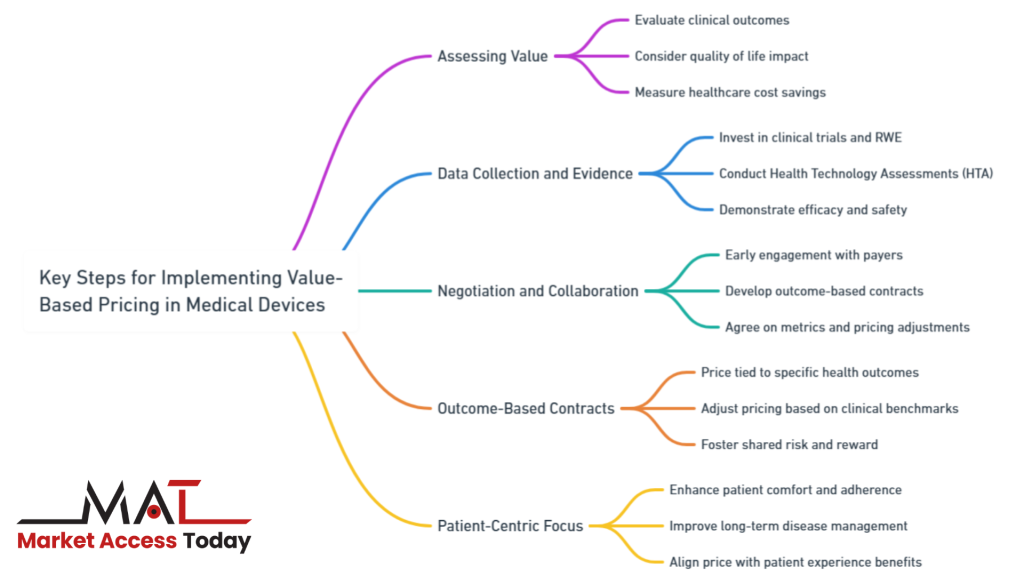
Below are five key steps to successfully implement value-based pricing:
- Assessing Value: Manufacturers and healthcare providers must evaluate the value of a device based on several key metrics.
- Data Collection and Evidence: Collecting robust data through clinical trials, real-world evidence (RWE), and Health Technology Assessments (HTA) is critical.
- Negotiation and Collaboration: Successful implementation of value-based pricing requires early and ongoing collaboration between manufacturers, payers, and healthcare systems.
- Outcome-Based Contracts: Develop contracts that tie the price of the device to patient outcomes and overall healthcare cost savings.
- Patient-Centric Focus: Incorporate the patient’s perspective in determining the value of the device, ensuring it improves not only clinical outcomes but also quality of life and patient satisfaction.
Let`s deep dive into the key elements for implementing value-based pricing in medical devices.
Assessing Value:
A crucial step in implementing value-based pricing is the accurate assessment of a medical device’s value. This involves evaluating the clinical outcomes the device can achieve, such as improved survival rates, faster recovery times, or fewer complications. Additionally, the device’s impact on quality of life must be considered—how does it enhance the patient experience or enable better long-term health outcomes? Another essential factor is the savings the device can generate for the healthcare system, whether by reducing hospital stays, preventing readmissions, or minimizing the need for additional treatments. Manufacturers and healthcare providers work together to measure these outcomes, ensuring that the price of the device aligns with the benefits it provides.
Data Collection and Evidence:
To justify higher prices under a value-based pricing model, robust data collection and evidence are paramount. Manufacturers must invest in comprehensive clinical trials and generate real-world evidence (RWE) to demonstrate the efficacy and safety of their devices. Health Technology Assessments (HTA) play a critical role in this process, as they evaluate the clinical effectiveness, cost-effectiveness, and broader impact of medical devices on patient care. The more compelling the data, the stronger the case for higher pricing based on value. HTAs, in particular, provide third-party validation of the device’s impact on healthcare outcomes and costs, offering manufacturers leverage in pricing discussions with payers and healthcare providers.
Negotiation and Collaboration:
The successful adoption of value-based pricing depends on effective negotiation and collaboration between manufacturers, payers, and healthcare systems. Manufacturers must engage early with payers to ensure their devices meet the criteria for reimbursement under value-based pricing models. This collaborative approach often involves negotiating contracts that link the price of the device to specific outcomes, such as improved patient health or reduced hospital costs. Both parties must agree on the metrics used to measure value and the conditions under which pricing adjustments might occur. This collaborative approach not only facilitates the adoption of value-based pricing but also ensures that all stakeholders share the risks and rewards of the device’s performance in the real world.
Outcome-Based Contracts:
An effective implementation of value-based pricing often relies on outcome-based contracts. These contracts tie the price of the medical device to the achievement of specific health outcomes and cost savings. For instance, pricing may be adjusted if the device meets or exceeds predefined clinical benchmarks such as reducing readmission rates, shortening recovery times, or improving patient satisfaction. These contracts incentivize manufacturers to continuously monitor and improve device performance while ensuring that payers receive value for their investment. This alignment of pricing with outcomes fosters a balanced relationship where all stakeholders benefit based on the actual performance of the device in practice.
Patient-Centric Focus:
The implementation of value-based pricing also requires a strong emphasis on patient-centered outcomes. Devices that significantly enhance patient comfort, simplify treatment adherence, or improve long-term disease management contribute to overall healthcare quality and justify a premium price. For example, wearable devices that allow patients to monitor chronic conditions remotely provide immediate health benefits while reducing the need for in-person consultations. By improving patients’ quality of life and enabling them to take a more active role in managing their health, these devices demonstrate their value beyond clinical metrics. Incorporating the patient’s perspective in pricing discussions helps align the device’s price with the comprehensive benefits it provides.
Challenges and Considerations for Value-Based Pricing in Medical Devices
Implementing value-based pricing (VBP) in medical devices comes with its own set of challenges that manufacturers, healthcare providers, and payers must navigate. These challenges are often shaped by regional regulations, market access dynamics, and ethical considerations. The complexity of implementing VBP stems from the diverse regulatory environments across different countries, which can create barriers to market entry and necessitate extensive compliance efforts.
In some regions, the evidence requirements for demonstrating value may differ significantly, delaying approvals and complicating pricing strategies. Market access hurdles also arise when attempting to justify the higher upfront costs of value-driven devices, particularly in regions where healthcare budgets are constrained or where reimbursement systems are not yet aligned with outcome-based care models.
Ethical considerations further complicate the landscape for value-based pricing in medical devices. While VBP aims to reflect the true value a device brings to patients and healthcare systems, there is a risk that higher prices could limit access to these advanced technologies, particularly for lower-income populations. Balancing the need for profitability with the goal of equitable access to life-saving devices is a delicate issue that requires careful navigation by policymakers and manufacturers alike.
Additionally, healthcare providers and payers must align on outcome-based metrics and agree on how to measure success, which can be a source of tension and misalignment in value-based models. These challenges highlight the importance of fostering collaboration among all stakeholders to ensure that value-based pricing is implemented in a way that benefits both patients and the broader healthcare system.
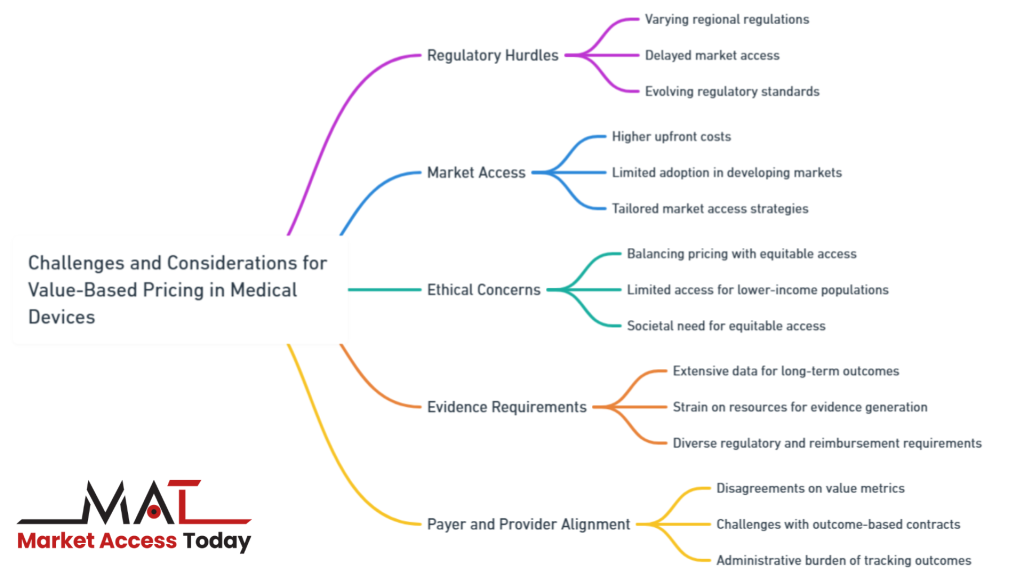
Below are 5 key challenges and considerations associated with VBP:
- Regulatory Hurdles: Varying regulatory requirements across regions can delay market access and add complexity to pricing decisions.
- Market Access: Higher upfront costs in value-based pricing may limit the adoption of devices in developing markets, despite their long-term benefits.
- Ethical Concerns: Balancing value-based pricing with equitable access remains a challenge, as higher prices can limit access for lower-income populations.
- Evidence Requirements: The need for extensive data to support value-based pricing can strain resources and slow down the commercialization process.
- Payer and Provider Alignment: Aligning payers and providers on value metrics and managing outcome-based contracts is essential but often challenging in the value-based pricing model.
Let`s deep dive into the 5 key challenges and considerations for value-based pricing in medical devices.
1. Regulatory Hurdles:
Regulatory environments vary significantly across regions, and these differences can have a profound impact on pricing decisions. In some regions, regulatory bodies may require extensive clinical data and evidence of long-term value before approving a device for market entry at a higher price point. Regulatory delays or additional requirements may hinder the swift adoption of value-based pricing. Manufacturers must also stay updated on the evolving regulatory standards, particularly regarding safety, efficacy, and post-market surveillance, as these can affect pricing and market access timelines.
2. Market Access:
Value-based pricing can pose both opportunities and challenges for market access, especially in developing health markets. While VBP can highlight the value of innovative devices, it may also limit access due to the higher upfront costs. In regions with constrained healthcare budgets, higher-priced devices may struggle to gain traction despite their long-term cost-effectiveness. Companies need to consider tailored market access strategies that account for regional differences in healthcare funding, reimbursement policies, and the economic capacity of healthcare systems in these markets.
3. Ethical Concerns:
One of the most pressing challenges in value-based pricing is ensuring equitable access to high-cost medical devices. Although VBP is designed to reflect the value a device delivers, the higher prices can create disparities in access, particularly for lower-income patients or regions. Ethical concerns arise when advanced medical technologies become accessible only to wealthier populations, leaving others behind. Policymakers and manufacturers must work together to create pricing models that balance profitability with the broader societal need for equitable access to life-saving and life-improving technologies.
4. Evidence Requirements:
The need for robust evidence to support value-based pricing can present a significant challenge for manufacturers. Generating the level of data required to justify higher prices, particularly in terms of long-term outcomes and cost savings, often demands extensive clinical trials, real-world evidence (RWE), and ongoing post-market surveillance. This evidence generation can be time-consuming and costly, creating financial strain for smaller manufacturers or slowing down the commercialization process for new devices. Ensuring that the evidence meets the diverse requirements of various regulatory and reimbursement agencies further complicates this challenge.
5. Payer and Provider Alignment:
Another critical consideration in implementing value-based pricing is achieving alignment between payers and providers. While both groups may recognize the benefits of a value-based approach, disagreements can arise over the metrics used to measure value, the terms of outcome-based contracts, or the acceptable price for a device. Additionally, the administrative burden of tracking outcomes and adjusting prices accordingly can deter some payers and providers from fully embracing value-based models. Manufacturers must engage in ongoing dialogue and negotiation with these stakeholders to ensure a shared understanding of value and a mutually beneficial pricing structure.
Opportunities and Advantages for Value-Based Pricing in Medical Devices
Value-based pricing in medical devices not only poses challenges but also unlocks several compelling opportunities and advantages for manufacturers, healthcare providers, and payers. By aligning device pricing with the outcomes they deliver, value-based pricing fosters a system that rewards innovation, improves patient care, and drives economic efficiency.
This model encourages manufacturers to develop cutting-edge technologies that offer superior clinical benefits, knowing that the value they create will be reflected in the pricing structure. At the same time, healthcare providers and payers can achieve greater cost savings and enhanced patient outcomes, as devices priced based on their real-world impact help streamline care and reduce long-term healthcare expenditures.
Moreover, value-based pricing opens the door for deeper collaboration between key stakeholders across the healthcare continuum. Manufacturers are incentivized to engage with payers and providers early in the development process to ensure their devices meet the evolving needs of outcome-based care models. This collaboration helps build stronger, data-driven relationships that prioritize patient outcomes and create shared incentives for improving healthcare delivery.
In turn, payers and providers benefit from having access to devices that are not only clinically effective but also cost-efficient over time, further reinforcing the adoption of value-based models. The shift toward value-based pricing is ultimately an opportunity to align financial and clinical goals, creating a more sustainable and patient-centered healthcare system.
Below are 5 key opportunities and advantages associated with this pricing model:
- Regulatory Alignment for Innovation: Value-based pricing encourages innovation by aligning with regulatory agencies focused on promoting value-based care, potentially speeding up the approval process for high-value devices.
- Improved Market Access for High-Value Devices: By demonstrating long-term value, such as cost savings and better outcomes, value-based pricing can enable premium devices to access markets that might otherwise be constrained by budget limitations.
- Ethical Alignment with Value-Based Care: This pricing model ensures that devices are priced according to the value they deliver, promoting fairness and improving access to the most effective technologies for patients in need.
- Data-Driven Decision Making: Value-based pricing emphasizes the importance of data collection, allowing manufacturers to strengthen their market position through clinical evidence and real-world outcomes, ultimately leading to more informed pricing strategies.
- Collaborative Partnerships with Payers and Providers: The focus on outcomes fosters stronger relationships between manufacturers, payers, and providers, leading to long-term partnerships that prioritize shared success and continuous device optimization.
Let`s deep dive into the 5 key opportunities and advantages of value-based pricing in medical devices.
1. Regulatory Alignment for Innovation:
Value-based pricing can act as a catalyst for innovation by incentivizing the development of medical devices that offer superior clinical outcomes and cost savings. As regulatory agencies increasingly focus on promoting value-based care, there is a growing opportunity for manufacturers to align their product development strategies with regulatory goals. This alignment can lead to expedited approval processes for devices that meet high standards of clinical efficacy and demonstrate clear value to patients and healthcare systems. For manufacturers, this means faster market entry for breakthrough technologies, reducing time-to-market for innovative devices that deliver measurable health benefits.
2. Improved Market Access for High-Value Devices:
Value-based pricing offers a pathway for premium medical devices to enter markets that might otherwise be inaccessible due to cost constraints. By demonstrating long-term value, such as reducing hospital readmissions or improving patient outcomes, manufacturers can justify higher upfront costs to payers and providers. This strategy opens doors for high-value devices to gain broader market access, particularly in regions where healthcare systems are becoming more focused on outcome-based care models. Moreover, value-based pricing can help overcome budgetary challenges by demonstrating that the initial investment in a device will yield significant savings over time.
3. Ethical Alignment with Value-Based Care:
In a value-based pricing framework, the ethical focus shifts toward ensuring that the price of medical devices reflects their contribution to patient outcomes and healthcare system efficiency. This model promotes fairness by prioritizing access to technologies that provide the greatest health improvements for patients. It also encourages healthcare systems to allocate resources more effectively by directing funds toward devices that deliver the highest value, thereby improving equity in healthcare access. As a result, value-based pricing can enhance the ethical foundation of healthcare by ensuring that the best technologies are available to patients who need them most.
4. Data-Driven Decision Making:
One of the core advantages of value-based pricing is its reliance on data-driven decision making. Manufacturers are encouraged to invest in collecting robust clinical data, real-world evidence (RWE), and long-term outcomes to support their pricing models. This emphasis on evidence-based practice empowers manufacturers to demonstrate the true value of their devices during negotiations with payers and healthcare providers. By leveraging comprehensive data, manufacturers can make stronger cases for their pricing strategies, highlighting the tangible benefits their devices bring to patient care and healthcare efficiency. Over time, this data-driven approach fosters greater transparency and trust between stakeholders.
5. Collaborative Partnerships with Payers and Providers:
Value-based pricing encourages a shift toward collaborative partnerships between manufacturers, payers, and healthcare providers. Instead of focusing solely on upfront costs, these stakeholders work together to align pricing with the outcomes that matter most, such as improved patient health and reduced healthcare costs. By adopting a shared-risk model, where the success of a device is linked to its performance in real-world settings, manufacturers, payers, and providers create long-term relationships built on mutual benefit. This collaboration also helps to ensure that devices are continuously optimized to deliver better outcomes, fostering innovation and driving improvements in patient care.

Case Studies and Examples
Value-based pricing has been successfully implemented in a variety of advanced medical devices that demonstrate superior clinical outcomes and long-term cost savings. By aligning the price of these devices with the value they deliver to patients and healthcare systems, manufacturers have been able to justify premium pricing for innovative technologies. This section highlights real-life examples of medical devices that have utilized value-based pricing models, illustrating their impact on healthcare delivery and overall system efficiency. These case studies serve as evidence of the growing trend toward value-driven care in the medical device industry.
Let`s deep dive into 3 case studies and examples of value-based pricing in medical devices.
Da Vinci Surgical System:
The Da Vinci Surgical System, a robotic-assisted surgical platform, is a prime example of a medical device priced based on its value. This system allows for minimally invasive surgery, resulting in quicker recovery times, reduced blood loss, and fewer complications compared to traditional open surgery. The higher cost of the Da Vinci system is justified by the value it provides in improving patient outcomes and reducing long-term healthcare costs. Hospitals adopting this technology have reported significant improvements in surgical precision, patient satisfaction, and decreased post-operative recovery times. These benefits contribute to overall healthcare savings by reducing the need for extended hospital stays and follow-up procedures, making the value-based pricing model for this device sustainable and successful.
Continuous Glucose Monitors (CGMs):
Continuous Glucose Monitors, such as the Dexcom G6, represent another successful implementation of value-based pricing. CGMs are advanced diagnostic tools used to monitor blood glucose levels in real time, significantly improving the management of diabetes. These devices help patients avoid dangerous blood sugar fluctuations, reduce the need for frequent finger-prick tests, and promote better long-term glucose control, which reduces the risk of diabetes-related complications such as cardiovascular disease and nerve damage. The higher upfront cost of CGMs is offset by the long-term benefits, including improved patient health outcomes and reduced emergency visits and hospitalizations. By demonstrating clear value in both clinical outcomes and cost savings, CGMs have successfully justified their premium pricing in the healthcare market.
Transcatheter Aortic Valve Replacement (TAVR):
TAVR devices, such as the Sapien valve by Edwards Lifesciences, provide a less invasive option for patients with severe aortic stenosis who are at high risk for open-heart surgery. The value of TAVR is reflected in its ability to deliver similar or better outcomes than traditional surgery with significantly lower recovery times, less trauma, and reduced hospital stays. Although TAVR procedures are more expensive upfront, the long-term benefits—such as improved quality of life, fewer complications, and faster recovery—make the higher cost justifiable. Studies have shown that TAVR can reduce healthcare expenditures over time by lowering the need for prolonged care and additional interventions, leading to widespread adoption and a successful value-based pricing model.
Future of Value-Based Pricing in Medical Devices
As healthcare continues to evolve, value-based pricing (VBP) is poised to become an increasingly vital model for determining the cost of medical devices. Several emerging trends are set to shape the future of VBP, particularly as innovation continues to drive new technologies and solutions in the medical device industry. These trends include the growing integration of digital health tools, such as wearables and remote monitoring devices, which enable real-time patient data collection and personalized care.
As these technologies demonstrate their ability to enhance patient outcomes and reduce costs, they will further cement the role of VBP in aligning device pricing with the value they deliver to both patients and healthcare systems. In this future landscape, medical devices that leverage predictive analytics, artificial intelligence, and precision medicine will be ideally suited for value-based pricing models, as their impact on improving diagnostics, treatment plans, and overall healthcare efficiency will justify premium pricing.
The future of VBP will also see a stronger emphasis on collaboration among manufacturers, healthcare providers, and payers to ensure that medical devices meet the evolving needs of outcome-focused care. Providers will play an increasingly significant role in validating the real-world effectiveness of devices, tracking patient outcomes, and ensuring that these metrics align with the value-based pricing framework.
Payers, too, are expected to adopt more outcome-based contracts that reward devices for their demonstrated benefits in real-world settings. This shift toward shared-risk models will foster deeper partnerships between stakeholders, ensuring that the success of medical devices is measured not only by their clinical performance but also by their ability to drive meaningful improvements in patient care and healthcare cost savings. As these trends gain momentum, value-based pricing will become a cornerstone of innovation, ensuring that cutting-edge medical technologies are both accessible and impactful in delivering high-value healthcare.
Below are 5 key trends with the value-based pricing model in medical devices;
- Digital Health Integration: Wearables and remote monitoring tools that enhance care and reduce costs will thrive under value-based pricing.
- Predictive Analytics: Devices using predictive analytics to improve outcomes and prevent complications fit well with value-based pricing models.
- AI-Enhanced Devices: AI-powered tools that increase precision and efficiency in healthcare justify premium pricing through improved diagnostics and treatments.
- Healthcare Provider Involvement: Providers will help validate device value by tracking patient outcomes, ensuring alignment with value-based pricing.
- Payer Engagement: Payers will support value-based pricing by adopting outcome-based contracts, and rewarding devices that demonstrate real-world benefits.
Let`s deep dive into the 5 key trends of value-based pricing in medical devices.
Digital Health Integration:
The integration of digital health technologies, such as wearable devices, mobile health apps, and remote monitoring tools, presents a significant opportunity for VBP models. Devices that collect and transmit real-time patient data, monitor chronic conditions, and support telemedicine can deliver immense value by enabling more personalized care and reducing the need for in-person consultations or hospital visits. As these digital health solutions prove their ability to improve outcomes and enhance efficiency, they are well-positioned to benefit from value-based pricing, where the price is closely tied to the impact on patient health and system-wide savings.
Predictive Analytics:
Predictive analytics, driven by big data and machine learning, will play a critical role in the future of VBP. Medical devices that leverage predictive analytics can anticipate patient risks, improve early diagnosis, and optimize treatment plans. For instance, devices that analyze patient data to predict complications or recommend preventative measures can significantly reduce healthcare costs and improve outcomes. The ability of these devices to deliver high value through predictive insights will make them ideal candidates for value-based pricing models, where their price is aligned with the tangible benefits they provide.
AI-Enhanced Devices:
Artificial intelligence (AI) is transforming medical devices, enabling advanced diagnostics, precision medicine, and automated treatment solutions. AI-enhanced devices, such as smart imaging systems, robotic surgery tools, and AI-powered diagnostic platforms, are expected to play a significant role in the future of healthcare. These devices offer the potential for earlier and more accurate diagnoses, reduced human error, and personalized treatment options. The clear clinical value and potential cost savings of AI-enhanced devices make them strong candidates for value-based pricing, where pricing reflects their ability to improve patient outcomes and streamline care delivery.
Evolving Role of Healthcare Providers:
As VBP gains traction, healthcare providers are expected to take on a more prominent role in the implementation of this pricing model. Providers will increasingly work in partnership with manufacturers and payers to assess the real-world impact of medical devices, focusing on outcomes such as improved patient health, reduced complications, and long-term cost savings. This evolving role will require providers to adapt their practices to incorporate data collection, outcomes tracking, and patient-centered care as key components of their decision-making processes. Their involvement in validating the value of devices will be crucial to the successful adoption of VBP.
Increased Payer Engagement:
Payers, too, are expected to become more actively involved in adopting value-based pricing for innovative medical devices. With a growing focus on reducing healthcare costs while improving patient outcomes, payers are likely to embrace VBP models that reward devices for their performance rather than their cost alone. Payers will play a key role in shaping contracts that link payments to outcomes, encouraging manufacturers to demonstrate the real-world benefits of their products. As the relationship between payers and manufacturers evolves, the healthcare landscape will likely see an increased number of outcome-based agreements that drive value across the board.

Conclusion
Value-based pricing in medical devices represents a transformative shift in how healthcare systems, manufacturers, and payers approach the cost and value of innovative technologies. By aligning the price of medical devices with the tangible benefits they provide—whether through improved patient outcomes, enhanced efficiency, or long-term cost savings—this model encourages the development and adoption of high-value medical solutions that truly make a difference in patient care.
The case studies and examples discussed demonstrate how value-based pricing has already been successfully implemented across various sectors of the medical device industry, from surgical robots to continuous glucose monitors. These devices have shown that pricing models focused on value can lead to better health outcomes and more sustainable healthcare systems.
However, value-based pricing also brings its own set of challenges, such as regulatory hurdles, ethical concerns around equitable access, and the need for robust evidence to justify pricing. These challenges must be navigated carefully by stakeholders to ensure that value-based pricing delivers on its promise.
Looking ahead, the future of value-based pricing is bright, with emerging trends such as digital health integration, predictive analytics, and AI-enhanced devices set to benefit from this model. The evolving roles of healthcare providers and payers will further strengthen the framework for outcome-based pricing, fostering greater collaboration and ensuring that patients receive the most effective and innovative care.
In conclusion, value-based pricing is not only a pricing strategy but also a catalyst for driving innovation and improving healthcare outcomes. As this model continues to gain traction, it has the potential to reshape the medical device industry by rewarding devices that deliver real value to patients and the healthcare system, ultimately leading to a more efficient and effective healthcare landscape.
Know the Author: Öznur Seyhun is a global healthcare access advisor with nearly two decades of experience across pharmaceuticals, biotechnology, cell/gene therapy, MedTech, and nutrition sectors. She holds a degree in Global Management from the London School of Economics and has a diverse educational background in biochemistry, environmental science, and economics. Throughout her career, she has led digital health transformation, public policy, and advocacy initiatives in Europe, the Middle East, and Africa. Fluent in English and French, Öznur has worked and studied in various European countries and the U.S. She is also an active philanthropist, based in Istanbul, Türkiye, and continues to publish academic research.
10 FAQs for “Understanding Value-Based Pricing in Medical Devices: Aligning Cost with Patient Outcomes and Healthcare Efficiency”:
1. What is value-based pricing in medical devices?
Value-based pricing (VBP) in medical devices is a pricing model that aligns the cost of a medical device with the value it provides, focusing on improved patient outcomes, healthcare efficiency, and long-term cost savings rather than solely on production costs or market competition.
2. How does value-based pricing differ from traditional pricing models?
Unlike traditional models such as cost-plus or competitive pricing, VBP considers the clinical and economic benefits a device delivers to patients and healthcare systems. It emphasizes outcomes like patient recovery, quality of life, and healthcare cost reduction over production costs.
3. What are the benefits of value-based pricing for healthcare systems?
VBP offers several benefits, including better alignment between the cost of medical devices and the value they provide, improved patient outcomes, reduced long-term healthcare costs, and incentivizing the adoption of innovative and effective medical technologies.
4. Which companies have successfully implemented value-based pricing for medical devices?
Leading companies such as Medtronic and Johnson & Johnson have implemented VBP for devices like continuous glucose monitors (CGMs) and joint replacement implants, linking pricing to outcomes like improved patient health and reduced healthcare costs.
5. What role do clinical data and evidence play in value-based pricing?
Clinical data and real-world evidence (RWE) are essential for justifying the higher costs of medical devices under VBP. Manufacturers must provide robust evidence through clinical trials and Health Technology Assessments (HTAs) to demonstrate their devices’ value in improving patient outcomes and healthcare efficiency.
6. How does value-based pricing impact innovation in medical devices?
VBP encourages innovation by rewarding manufacturers for creating devices that deliver superior clinical outcomes, reduce healthcare costs, and address unmet medical needs. This model incentivizes the development of cutting-edge technologies that provide measurable value.
7. What are the challenges of implementing value-based pricing in medical devices?
Challenges include the need for extensive evidence generation, regulatory hurdles across different regions, ethical concerns around equitable access, and aligning payers and providers on outcome-based contracts.
8. How does value-based pricing affect market access for medical devices?
VBP can improve market access for high-value devices by demonstrating their long-term benefits to healthcare systems. However, it may pose adoption challenges in developing markets due to higher upfront costs, despite potential cost savings over time.
9. How do payers and providers contribute to the success of value-based pricing?
Payers and providers play a critical role by collaborating with manufacturers to define value metrics, track patient outcomes, and implement outcome-based contracts that tie the price of devices to their real-world performance.
10. What are the future trends for value-based pricing in medical devices?
Emerging trends include the integration of digital health technologies, predictive analytics, and AI-enhanced devices, all of which align with VBP by focusing on improving patient outcomes and driving healthcare efficiency through advanced data-driven insights.
References
Adams, R. J., & Naylor, C. D. (2020). Value-based healthcare and medical devices: Navigating pricing and outcomes. Health Policy, 124(6), 583-592. https://doi.org/10.1016/j.healthpol.2020.04.008
- Allen, D., & Malinowski, J. (2021). Transitioning to value-based pricing in medical devices: Lessons from the industry. Journal of Healthcare Management, 66(4), 276-289. https://doi.org/10.1097/JHM-D-21-00023
- Brindley, D. A., Kerridge, I. H., & Cuthbertson, R. (2017). The impact of value-based healthcare on medical device innovation and market access. Nature Reviews Drug Discovery, 16(11), 737-738. https://doi.org/10.1038/nrd.2017.204
- Cutler, D. M., & Ghosh, K. (2012). The potential for cost reduction through value-based healthcare pricing: Case study of a surgical device. Health Affairs, 31(9), 2004-2011. https://doi.org/10.1377/hlthaff.2012.0331
- Eijkemans, M. J. C., & Beishuizen, A. (2018). Value-based pricing in healthcare: A scoping review of current practices and frameworks. Journal of Medical Economics, 21(9), 949-960. https://doi.org/10.1080/13696998.2018.1484749
- Finkelstein, E. A., & Bilger, M. (2015). Value-based pricing and the role of real-world evidence in medical device adoption. Medical Decision Making, 35(8), 990-1001. https://doi.org/10.1177/0272989X15589295
- Garrison, L. P., Towse, A., & Briggs, A. (2020). Value-based pricing and reimbursement in practice: The impact on innovation in medical devices. Journal of Comparative Effectiveness Research, 9(6), 413-422. https://doi.org/10.2217/cer-2020-0008
- Gray, M. (2019). Healthcare transformation through value-based pricing of medical devices: A global perspective. Healthcare, 7(2), 63-78. https://doi.org/10.3390/healthcare7020063
- Husereau, D., & Henshall, C. (2018). Value-based pricing in medical devices: The importance of health technology assessment. Journal of Health Economics, 60, 54-61. https://doi.org/10.1016/j.jhealeco.2018.05.006
- Jain, N., & Budhwani, S. (2022). Value-based pricing: A sustainable business model for medical devices in the post-COVID-19 era. Business Horizons, 65(2), 141-148. https://doi.org/10.1016/j.bushor.2021.08.004
- Kaplan, R. S., & Porter, M. E. (2011). How to solve the cost crisis in healthcare. Harvard Business Review, 89(9), 46-64. https://hbr.org/2011/09/how-to-solve-the-cost-crisis-in-health-care
- Lothgren, M., & Ratcliffe, M. (2017). Moving towards value-based pricing in Europe: Case studies from the UK and Germany. PharmacoEconomics, 35(6), 589-600. https://doi.org/10.1007/s40273-017-0503-x
- Moore, M. A., & Patterson, J. (2016). Value-based pricing and medical devices: Implications for healthcare economics and delivery. Health Economics Review, 6(1), 22-34. https://doi.org/10.1186/s13561-016-0113-z
- Sullivan, S. D., & Mauskopf, J. A. (2010). Applying value-based pricing to medical technologies: Opportunities and challenges. Journal of Managed Care & Specialty Pharmacy, 16(1), 38-45. https://doi.org/10.18553/jmcp.2010.16.1.38
Towse, A., & Barnsley, P. (2021). Value-based pricing in the evolving healthcare landscape: Strategies and real-world applications. International Journal of Health Policy and Management, 10(12), 856-864. https://doi.org/10.34172/ijhpm.2021.64


This article has been prepared with the assistance of AI and reviewed by an editor. For more details, please refer to our Terms and Conditions. We do not accept any responsibility or liability for the accuracy, content, images, videos, licenses, completeness, legality, or reliability of the information contained in this article. If you have any complaints or copyright issues related to this article, kindly contact the author.
