

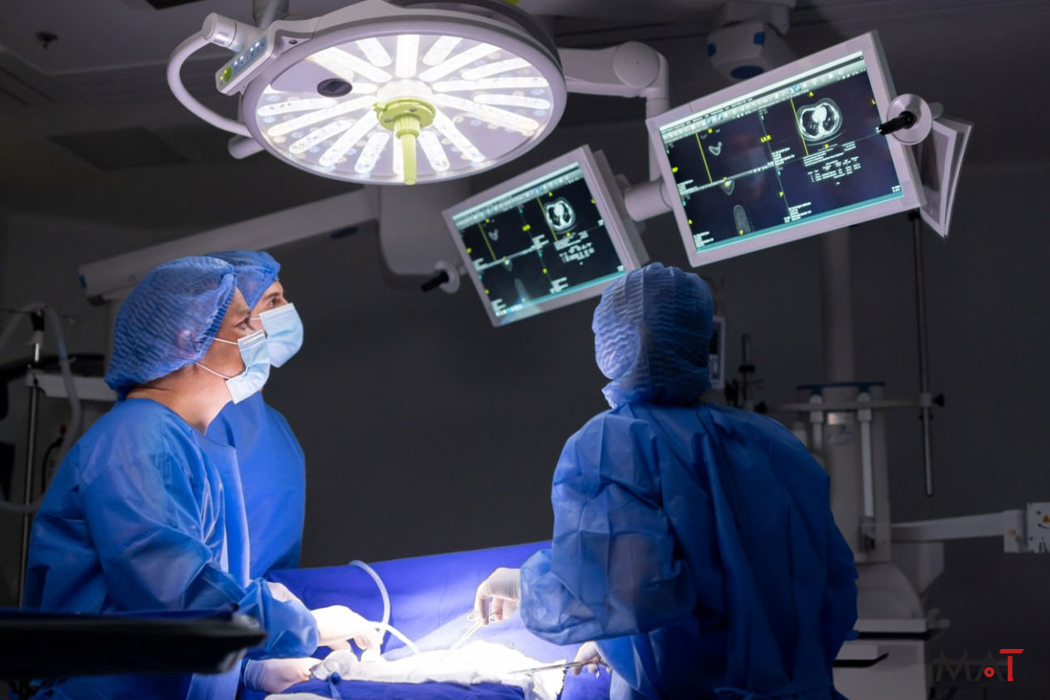
A groundbreaking development in fluorescent imaging promises significant advancements in diagnosing lethal mesenteric ischemia. Researchers have engineered a novel near-infrared II (NIR-II) fluorescent dye, TPETPA-TQT, which demonstrates enhanced visualization capabilities for mesenteric vasculature, crucial for timely and accurate diagnosis.
Breakthrough in NIR-II Dye Design
The team addressed the prevalent issue of low quantum yields in existing NIR-II dyes by designing TPETPA-TQT. This dye integrates tetraphenylethylene (TPE)-fused triphenylamine (TPA) into the robust core of 6,7-di(thiophen-2-yl)-[1,2,5]thiadiazolo[3,4-g]quinoxaline (TQT), resulting in a high quantum yield essential for practical imaging applications. By encapsulating TPETPA-TQT within F127, the researchers formed a nanocomplex that significantly boosts fluorescence intensity, achieving a 6.5-fold increase compared to previous formulations like TPA-TQT with DSPE-PEG2000.


Enhanced Diagnostic Imaging Capabilities
The improved nanocomplex allows real-time visualization of intricate abdominal vasculature and microvessels on the intestinal wall as narrow as 0.41 mm. This advancement offers a 94% improvement in signal-to-background ratio (SBR) over traditional indocyanine green (ICG) methods, facilitating more precise and early diagnosis of mesenteric ischemia. Such enhanced imaging capabilities are expected to play a pivotal role in clinical settings, potentially saving lives by enabling prompt intervention.
- TPETPA-TQT nanocomplex demonstrates superior fluorescence intensity and stability.
- Real-time imaging of microvessels down to 0.41 mm is now achievable.
- Significant improvement in SBR over existing dyes enhances diagnostic accuracy.
The development of TPETPA-TQT marks a significant leap forward in NIR-II imaging technology. By overcoming the limitations of previous dyes, this innovation not only enhances the visibility of critical vascular structures but also sets the stage for broader applications in medical diagnostics. The ability to visualize fine blood vessels with high precision could extend beyond mesenteric ischemia, potentially benefiting other areas where vascular imaging is paramount.

Moreover, the strategy of integrating TPE-fused TPA into a high-QY core could inspire future research in the design of advanced fluorescent probes. The enhanced suppression of molecular nonradiative decay and intersystem crossing demonstrated by TPETPA-TQT may lead to the creation of even more efficient imaging agents, pushing the boundaries of biomedical imaging technology.
The successful implementation of TPETPA-TQT nanocomplex in clinical imaging underscores the importance of interdisciplinary collaboration in advancing medical technologies. Combining expertise in chemistry, nanotechnology, and medical imaging has paved the way for this significant achievement, highlighting the potential for continued innovation in the field.
This breakthrough offers a promising tool for clinicians, providing a reliable and efficient method for assessing mesenteric vasculature. As the technology moves towards clinical adoption, it is poised to enhance diagnostic protocols, improve patient outcomes, and contribute to the overall advancement of medical imaging practices.


This article has been prepared with the assistance of AI and reviewed by an editor. For more details, please refer to our Terms and Conditions. We do not accept any responsibility or liability for the accuracy, content, images, videos, licenses, completeness, legality, or reliability of the information contained in this article. If you have any complaints or copyright issues related to this article, kindly contact the author.
